


Diia

Ukraine and the European Commission Discuss Port Security and Logistics Resilience within the QUAD Format

09 February 2026

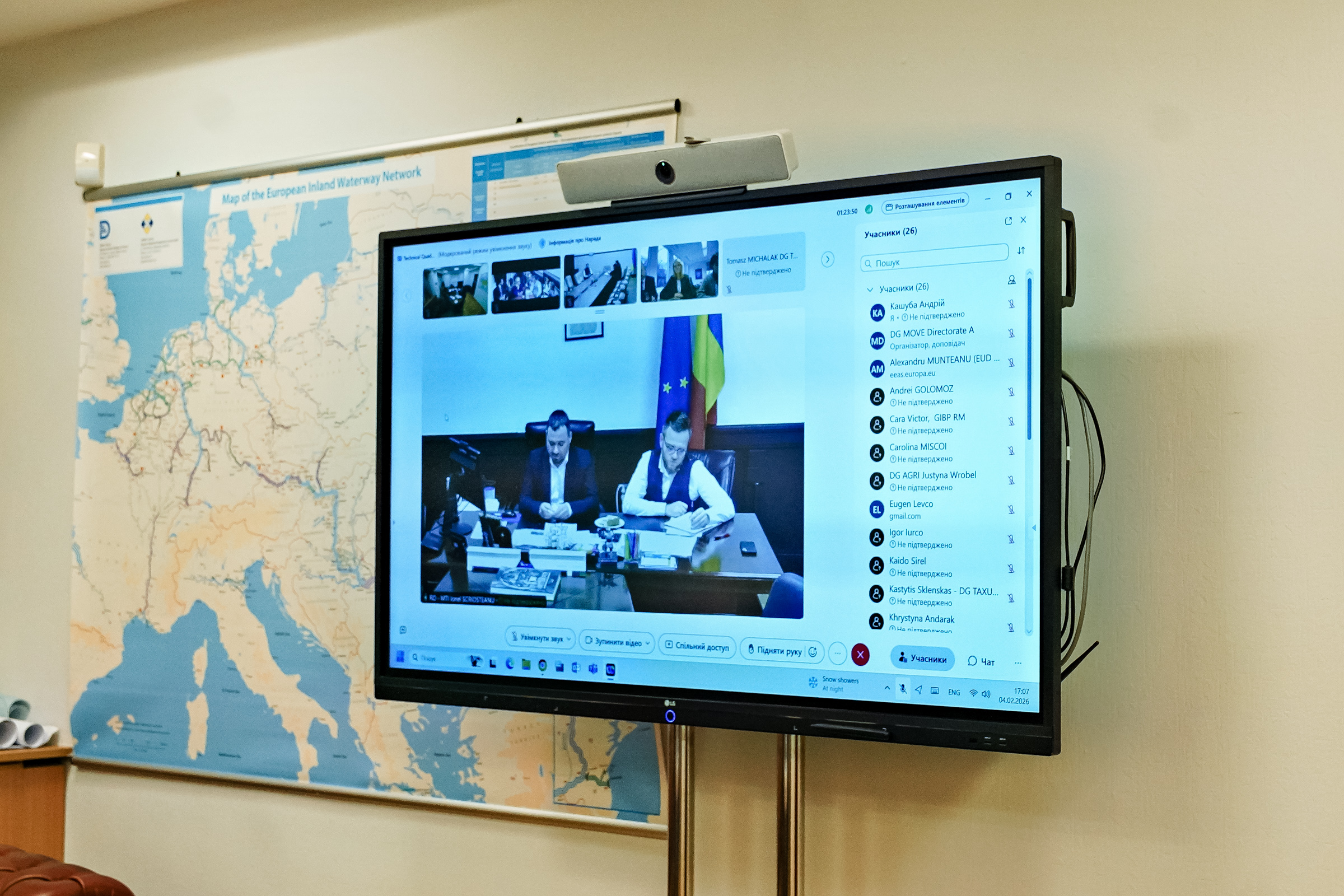
Another meeting in the QUAD format was held with the participation of representatives of Ukraine, the European Commission, Romania, and Moldova. The meeting focused on the current situation in the maritime sector, particularly in the Danube region, as well as the consequences of Russian aggression for port infrastructure and the coordination of further joint actions. 

During the meeting, participants discussed the impact of security threats, the challenging energy situation, and restrictions on access affecting transport movement, as well as short-term and long-term solutions to ensure logistics stability. Particular attention was paid to the role of Danube ports as a backup export route, the need to strengthen their resilience, and the importance of supporting the stable operation of the national carrier, the Ukrainian Danube Shipping Company, amid systematic attacks by Russia.

Deputy Minister for Development of Communities and Territories of Ukraine Andrii Kashuba briefed partners on the state of Ukraine’s maritime and river sectors and the consequences of shelling of port and energy infrastructure in late 2025 and early 2026.

«The Danube logistics corridor remains a critically important backup export route for Ukraine and has already proven its strategic role. Major cargo owners consistently factor in scenarios for redirecting flows to Danube ports. Therefore, our shared task is to ensure their resilience, security, and stable operation even under constant shelling and disruptions to logistics routes », — Andrii Kashuba emphasized. 

He noted that in 2025 more than 8.9 million tonnes of cargo were handled through the Danube ports of Izmail, Reni, and Ust-Dunaisk, which helped reduce pressure on land border crossings and supported Ukraine’s export capacity. At the same time, intensified attacks on Danube ports and nearby cities led to disruptions in the energy system and significant constraints on the operation of the port cluster.

The Ukrainian side outlined priority needs for restoring port power generation capacities, including the need for transformers and generators, and appealed to the EU to consider providing support.

In the long term, the parties discussed the need to strengthen regional cooperation, include the Ukrainian section of the Danube in the TEN-T network, and take further steps to attract European financing for the recovery and development of port infrastructure in the Danube region.

The meeting continued a series of working-level contacts between the Ukrainian side and the European Commission held throughout January. In particular, on 26–27 January in Brussels, Andrii Kashuba together with First Deputy Minister Alona Shkrum held separate meetings with Magda Kopczyńska, Director-General for Mobility and Transport, Mona Björklund, a representative of the European Commission, and Alan Baron, Danube Region Coordinator. The discussions covered, inter alia, the implementation of European legislation in the fields of inland waterways and maritime transport, the importance of recognition of professional qualifications of Ukrainian inland navigation vessel crews in line with EU standards, the introduction of technical requirements for vessels, and support for reforms in the port sector. Ukraine reaffirmed its readiness to complete the necessary audits and practical steps for full integration into the European regulatory framework and expressed interest in deepening cooperation with the EU on financial and technical support for the development of the Danube and maritime clusters.

Subscribe to the pages of the Ministry for Development of Communities and Territories of Ukraine on Facebook, Twitter, Telegram, and WhatsApp


Outdated Browser
Для комфортної роботи в Мережі потрібен сучасний браузер. Тут можна знайти останні версії.
Outdated Browser
Цей сайт призначений для комп'ютерів, але
ви можете вільно користуватися ним.
67.15%
людей використовує
цей браузер
Google Chrome
Доступно для
  • Windows
  • Mac OS
  • Linux
9.6%
людей використовує
цей браузер
Mozilla Firefox
Доступно для
  • Windows
  • Mac OS
  • Linux
4.5%
людей використовує
цей браузер
Microsoft Edge
Доступно для
  • Windows
  • Mac OS
3.15%
людей використовує
цей браузер
Доступно для
  • Windows
  • Mac OS
  • Linux