Ukraine's wartime experience as a lesson for Europe: Oleksii Balesta on railway resilience at URC 2026
As part of the Ukraine Recovery Conference 2026, a panel discussion was held on the role of rail transport during wartime and its importance for the security and logistics of Europe as a whole. Oleksii Balesta, Deputy Minister for Development of Communities and Territories of Ukraine, participated in the discussion.
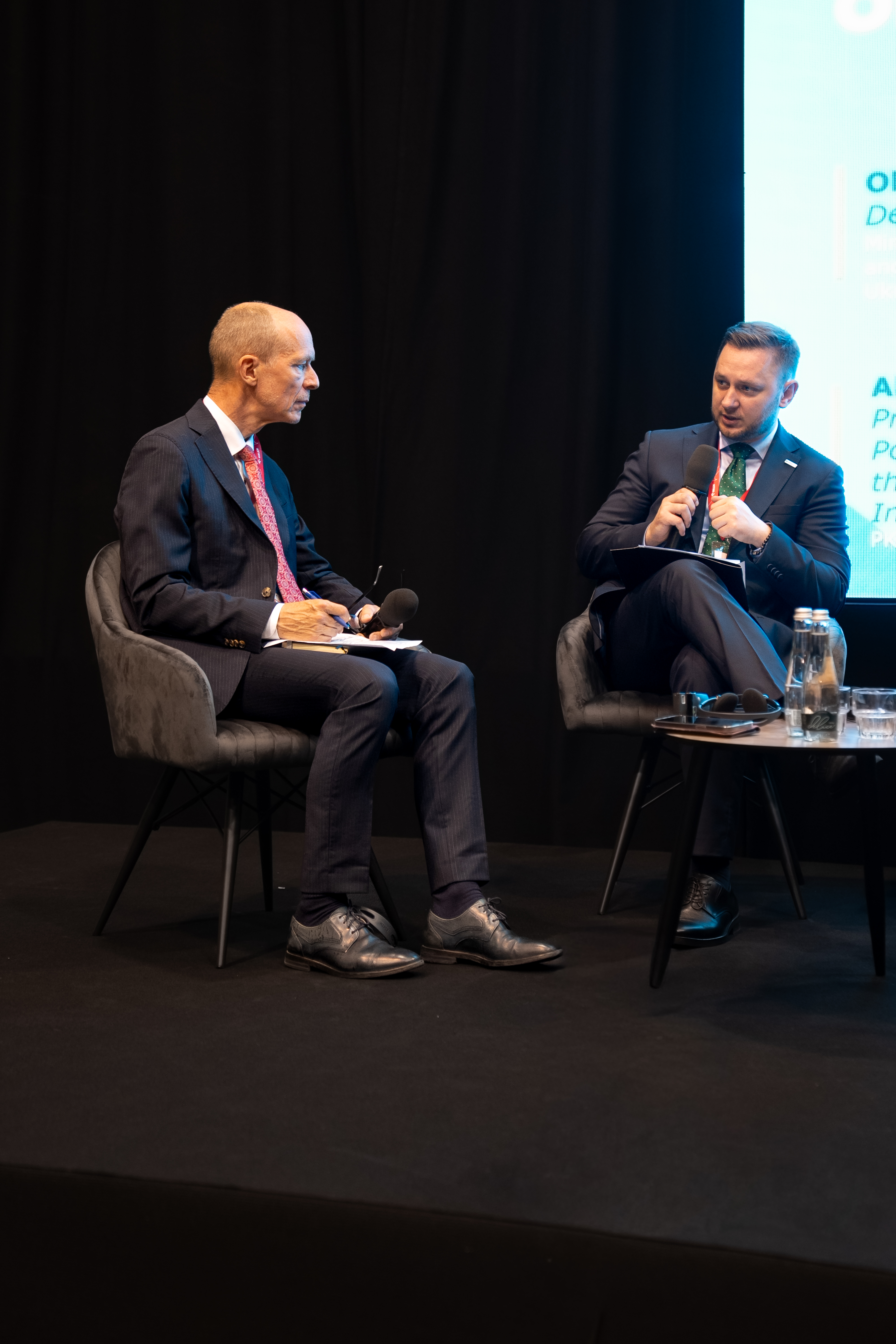
The «Rail Transport» panel brought together government officials, representatives of European institutions, national railway companies and international financial organisations. The discussion was moderated by Herald Ruijters, Deputy Director-General of the European Commission's Directorate-General for Defence Industry and Space (DG DEFIS).
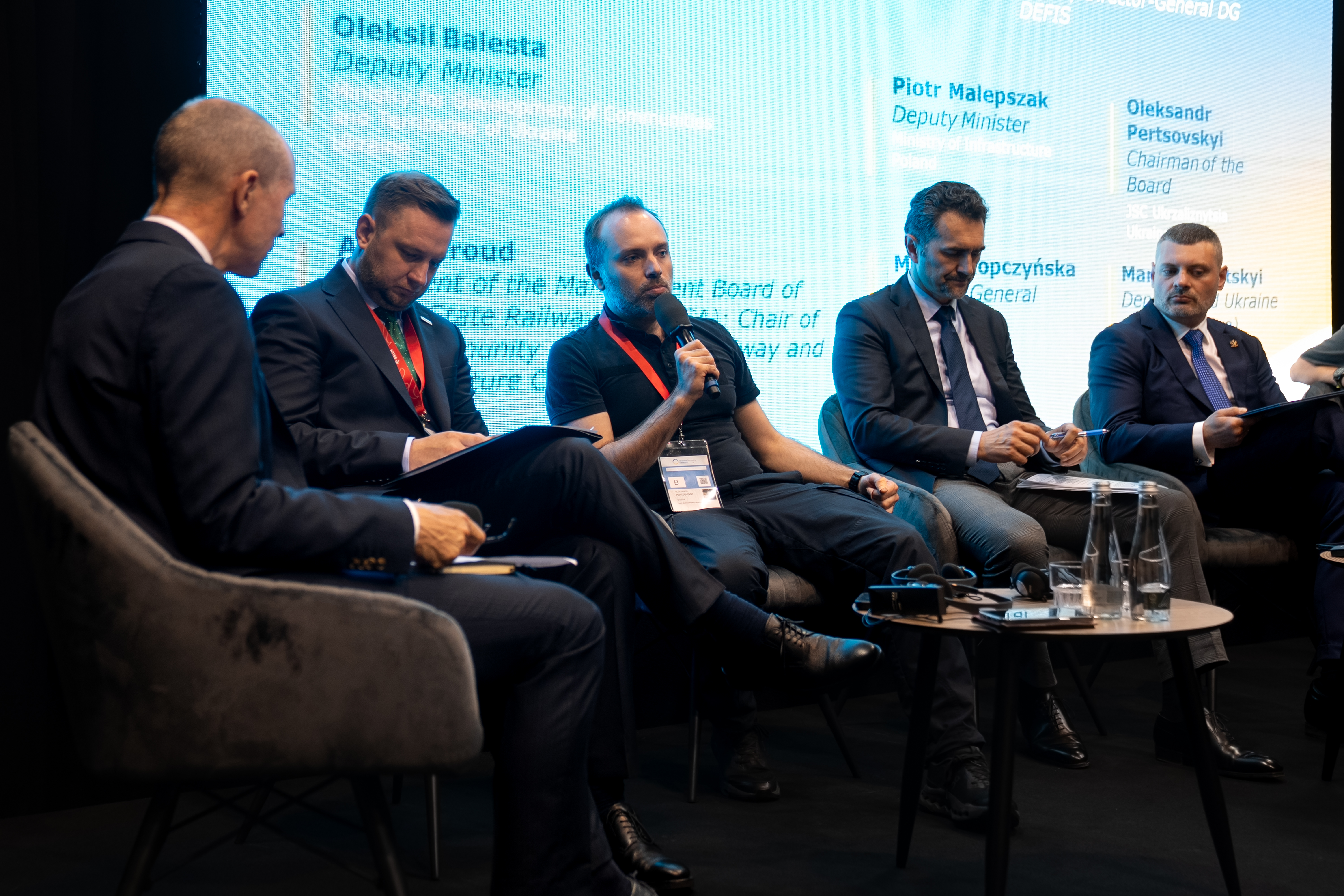
Speaking during the panel, Oleksii Balesta stressed that for more than four years the Ukrainian railway system has operated under continuous targeted attacks while continuing to perform its critical functions.
Over these years, we have faced several waves of threats—from isolated strikes to almost daily drone attacks on rolling stock. Since March alone, more than one hundred locomotives have been hit. The main conclusion is simple and pragmatic: it is impossible to protect everything, but it is possible to keep the railway moving.
Oleksii Balesta also focused on institutional issues. He noted that during the war, the vertically integrated state railway management model proved to be a critical advantage. A unified management structure, clear accountability and rapid decision-making in times of crisis enabled the railway system to continue operating without interruption. This is an important lesson for everyone responsible for critical infrastructure.
The Deputy Minister emphasised that Ukraine's experience is not a model that Europe should copy, but rather a practical warning about how quickly peaceful conditions can shift to hybrid and military threats.
«Sabotage, cyberattacks, strikes on energy infrastructure and attempts to disrupt logistics are no longer hypothetical scenarios. The issue is not only protecting infrastructure assets, but ensuring that the entire governance system is prepared to operate under large-scale crisis conditions. This is why a resilient railway system is one of the key elements of the continent's security», — said Oleksii Balesta.
Participants discussed Ukraine's integration into the EU railway area, the development of dual-use infrastructure, the elimination of border bottlenecks, and the importance of Ukraine's access to EU instruments, including the Connecting Europe Facility (CEF) Military Mobility programme under the 2028–2034 Multiannual Financial Framework.
Oleksii Balesta also announced that Ukraine will host the Transport Resilience Forum this autumn. The event is intended to become a practical platform for joint development, testing of solutions, and the establishment of new standards for transport infrastructure resilience.
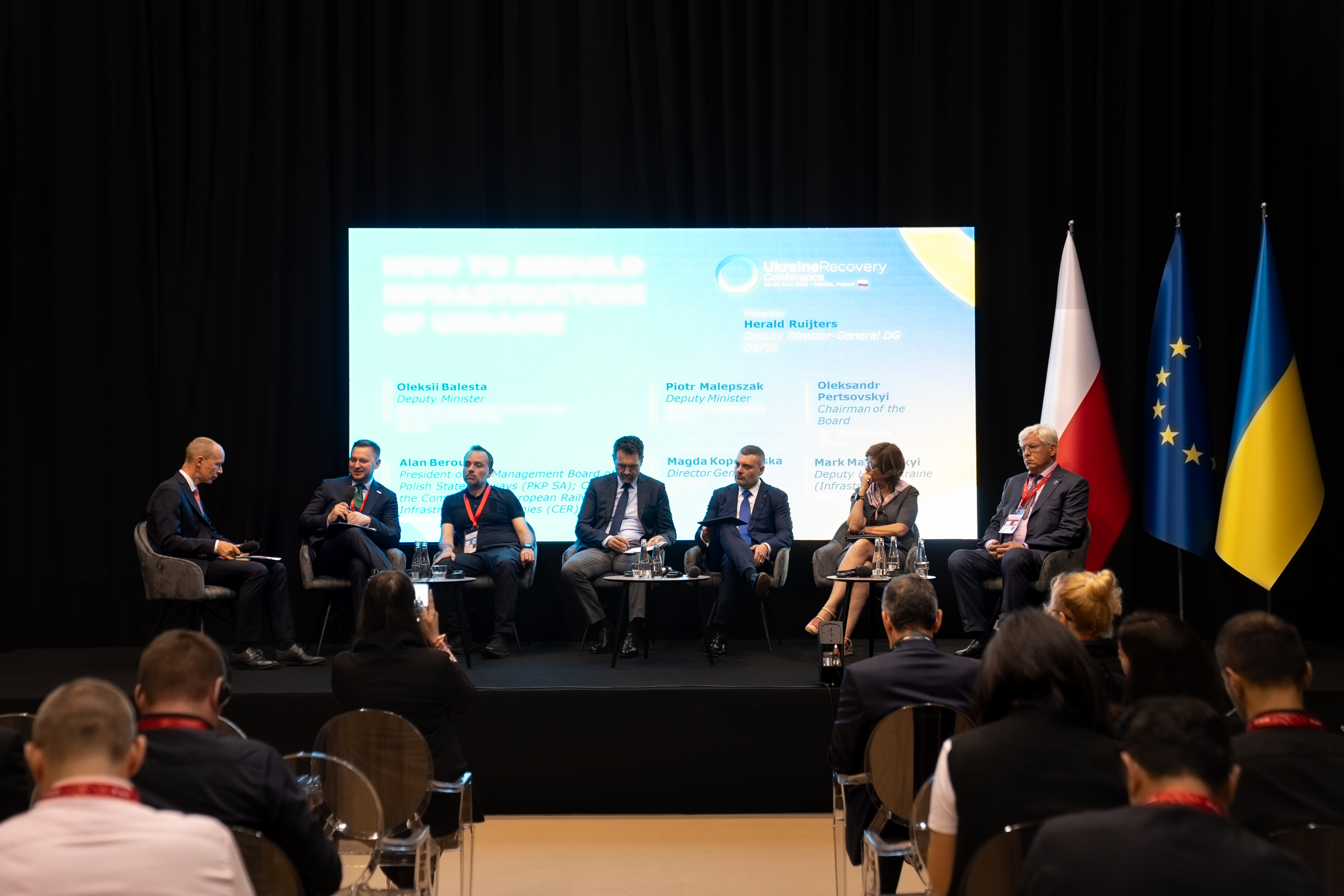
For reference: The Ukraine Recovery Conference 2026 is the annual international platform where international support for Ukraine is translated into concrete investments, partnerships and projects. This year's conference focused, among other priorities, on security, critical infrastructure, and shaping a new economic and security reality for Europe.
As part of the conference, the «Rail Transport» panel focused on the resilience of railway systems during wartime, Ukraine's integration into the EU railway area, and joint investment solutions for the development of critical infrastructure.
The panel was moderated by Herald Ruijters, Deputy Director-General of the European Commission's Directorate-General for Defence Industry and Space (DG DEFIS).
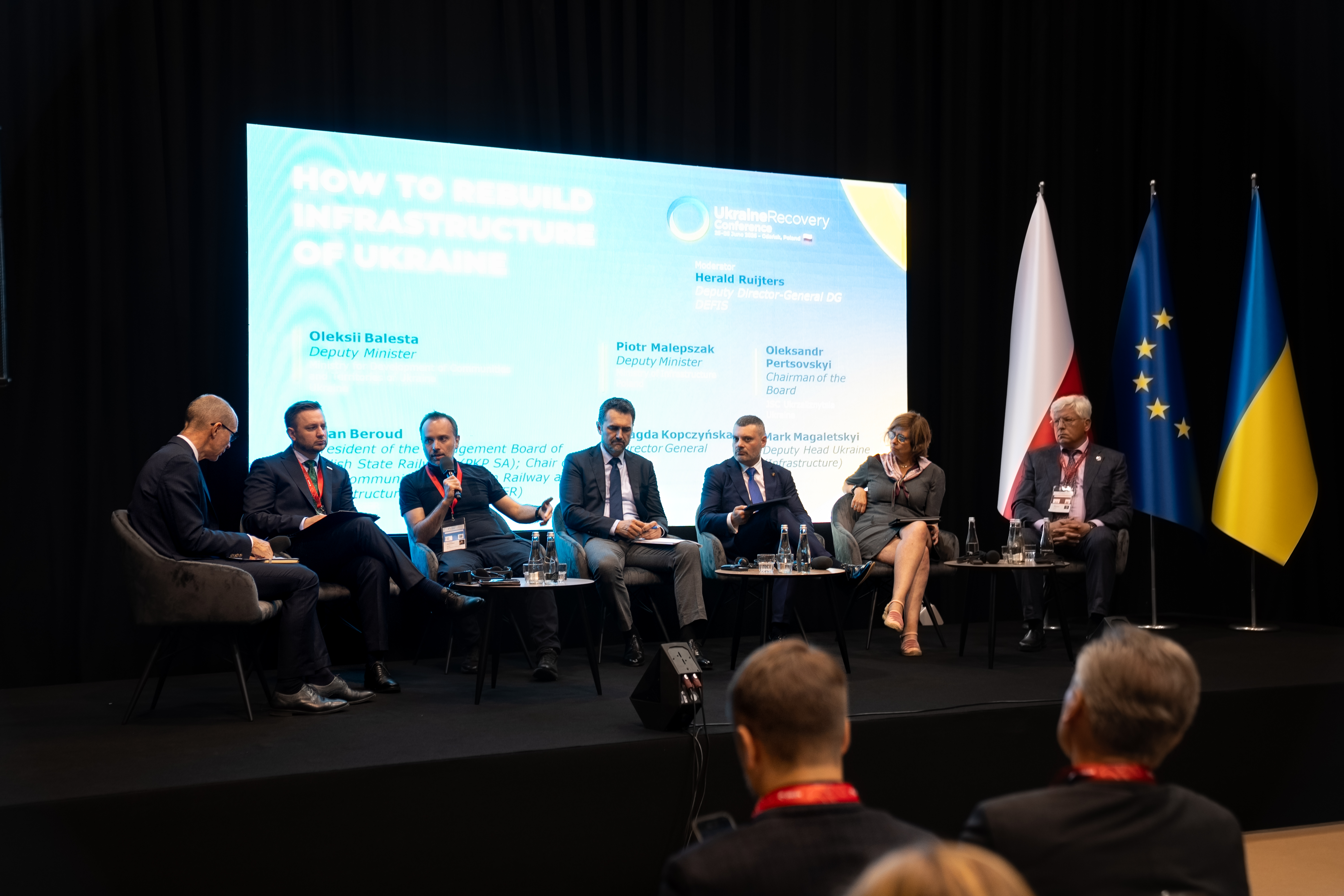
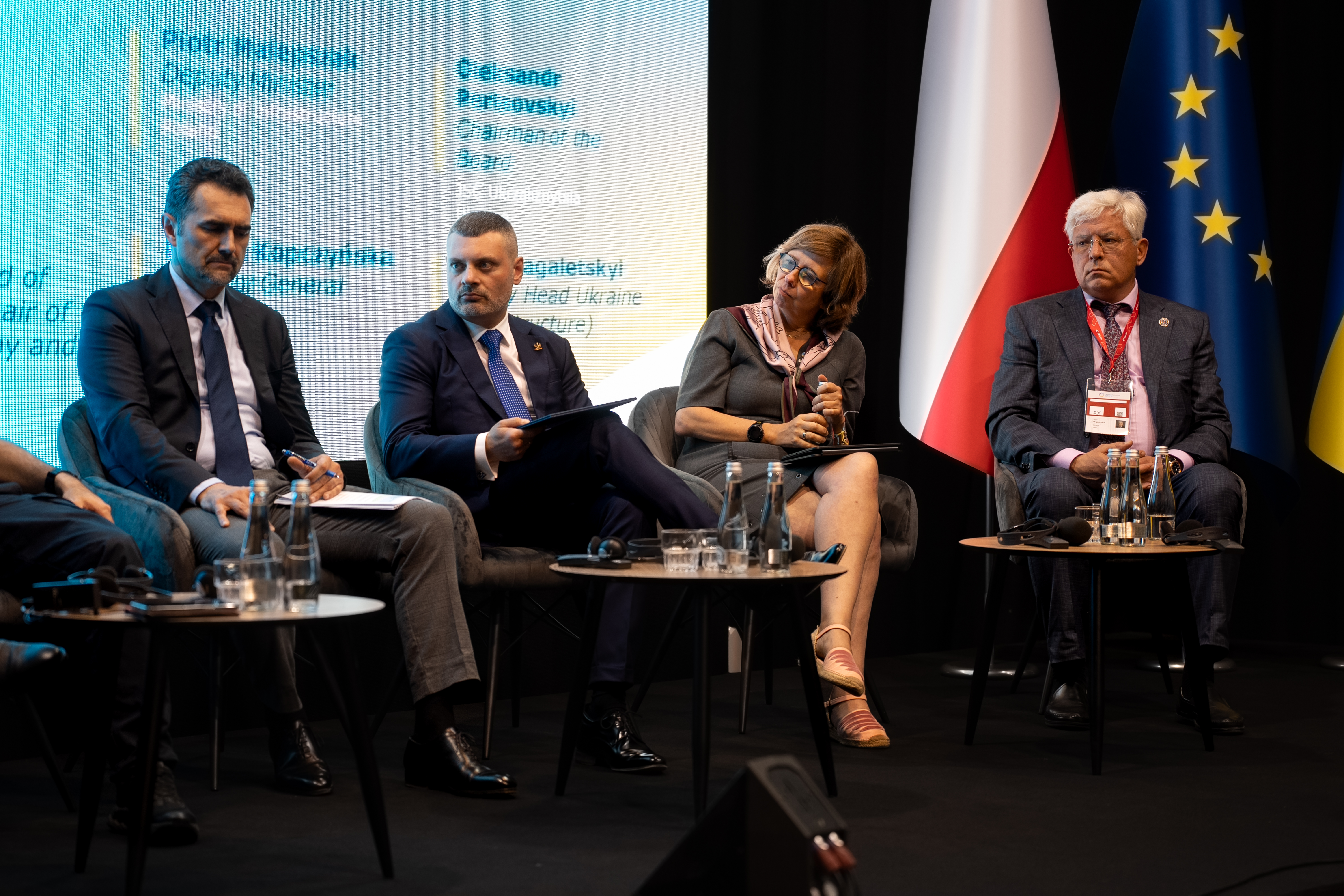
Participants included representatives of governments, European institutions, national railway companies and international financial organisations, including Oleksandr Pertsovskyi, Chairman of the Management Board of JSC Ukrzaliznytsia, Piotr Malepszak, Deputy Minister of Infrastructure of the Republic of Poland, Alan Beroud, CEO of the PKP Group and Chair of CER, Magda Kopczyńska, Director-General for Mobility and Transport at the European Commission (DG MOVE), and Mark Magaletskyi, Deputy Head of Ukraine (Infrastructure) at the EBRD.
Subscribe to the pages of the Ministry for Development of Communities and Territories of Ukraine on Facebook, Twitter, Telegram, Instagram, Threads and WhatsApp